
I. The conservation challenge – When cultural spaces need to be preserved and accessed in new ways
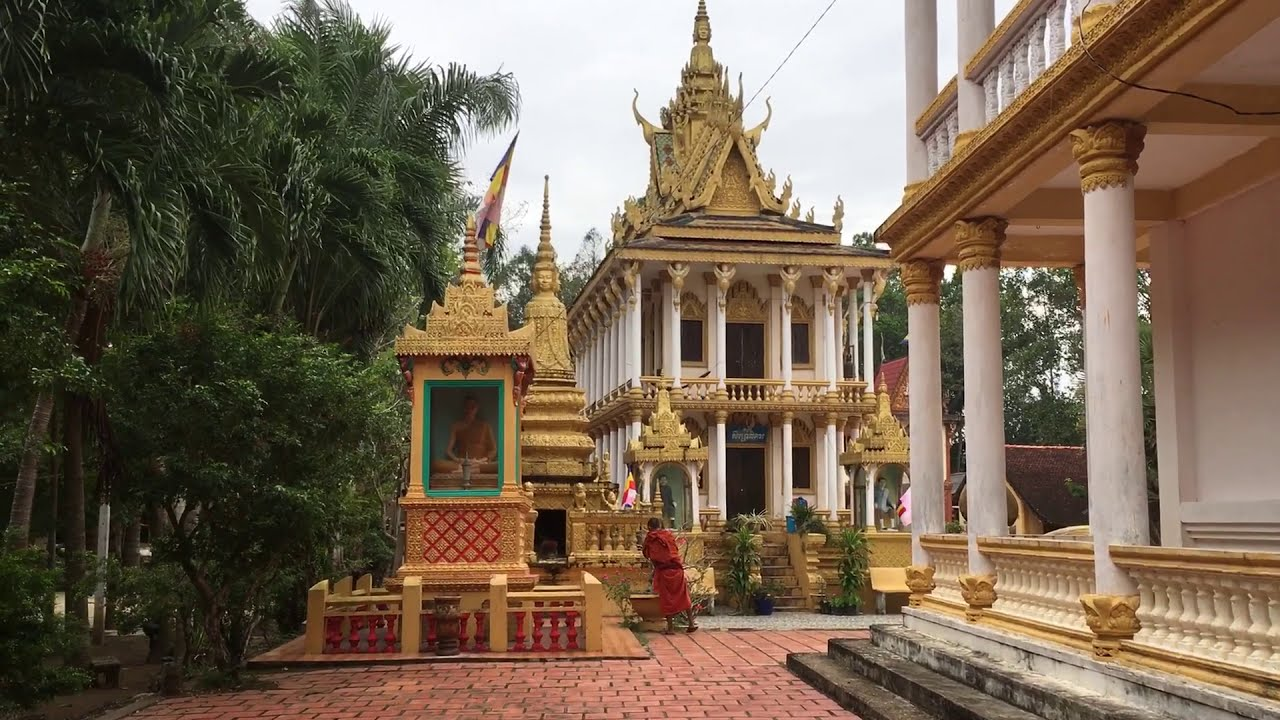
Khmer temples are not only religious structures but also spaces that preserve the architectural, artistic, and cultural values characteristic of the Khmer community. The heritage value is expressed through the overall structure, architectural composition, decorative patterns, crafted details, and artifacts associated with the cultural and religious life at each temple.
In the conservation process, the recording and preservation of tangible values in the form of digital data is becoming increasingly significant. Architectural spaces and artifacts are physical objects, tied to actual locations, and need to be directly observed to fully appreciate their forms, proportions, structures, and characteristic details.
However, if information is only preserved in 2D images, text, or discrete materials, the ability to fully recreate the space and form of the heritage remains limited. Especially with structures that have many architectural details, patterns, or artifacts of cultural value, digitizing in the form of 360 space and 3D models can create an additional method of visual preservation, allowing observation from multiple angles.
First, temple architecture needs to be recorded in the form of digital space.
A temple not only includes facades or individual images but is a whole made up of many areas, structures, and architectural details that are interconnected. 3D/360 technology helps recreate the space from a visual perspective, from the overall view to each area, creating a data source for introducing and exploiting heritage in the digital environment.
Second, valuable artifacts and details need to be visualized at the 3D level.
Selected artifacts, objects, or architectural details can be constructed into 3D Models, allowing observation of shapes and structures from multiple viewpoints. This is a supplementary method for preserving materials, especially for objects that need to be closely observed regarding form, scale, and characteristics.
Third, heritage needs to be preserved in relation to the real space.
An artifact, when separated from its context, may lose part of its meaning in the process of understanding. Therefore, combining 360 viewing space with a 3D Model helps users observe the overall architecture while also accessing specific objects within the spatial context where they are introduced.
Fourth, heritage data needs to have the ability to continue to be exploited and disseminated.
When architecture and artifacts are digitized, the data not only serves a one-time visit but can also become a visual resource supporting education, research, communication, and cultural introduction. This is a shift from preserving heritage through traditional materials to building a digital data source with broader accessibility.
From these requirements, the digitization of 4 Khmer temples in Vinh Long has become a solution that combines space preservation and the visualization of tangible values on a digital platform. Instead of just recording through images or text, the project builds a 3D/360 space for Gia Kiet Temple, Lotus Temple, Ky Son Temple, and Dai Tho Temple (Ba Pho), while integrating 3D Models to enhance the ability to preserve and explore the digitized objects and details.
Through this, heritage is expanded from physical space to digital space, creating an additional method to preserve, introduce, and promote the architectural – Khmer artifact values in the context of digital transformation.
See more>>>>> Digital heritage: The path to expanding access and preserving cultural heritage
II. Solution – Building a digital heritage space for 4 Khmer temples in Vinh Long
Star Global implements digitization of 4 Khmer temples, including:
- Gia Kiet Temple
- Lotus Temple
- Ky Son Temple
- Dai Tho Temple (Ba Pho)
The spaces are integrated on a 3D/360 platform, allowing users to select each location and start their exploration journey as needed.
Instead of having to search for individual information about each temple, users can access heritage points in a unified digital space, making it easy to switch between locations and explore multiple Khmer architectural spaces in the same journey.
1. Digital space of 4 Khmer temples – Connecting multiple heritage sites on one platform
One of the highlights of the project is the ability to gather 4 Khmer temple spaces on the same visiting platform.
Right from the overview interface, users can select each location:
- Gia Kiet Temple
- Lotus Temple
- Ky Son Temple
- Dai Tho Temple (Ba Pho)
Each temple becomes a separate attraction in the system, allowing users to access the space according to their needs or explore multiple locations in succession.
This organization creates a difference compared to digitizing a single structure. Heritage is viewed as a system of spaces capable of connecting, helping users not only learn about one location but also expand their journey to other temples.
For communication and cultural promotion efforts, focusing on 4 points on the same platform helps form an “experience map” of the Khmer temple space in Vinh Long, facilitating the public's easier exploration and access to the locations.
See more >>>> Explore the Khmer heritage space through the 3D/360 digitization project of Vinh Long Khmer Temple

3D/360 visiting space of 4 Khmer temples in Vinh Long
2. 360° Tour – Directly explore the space of each temple from afar
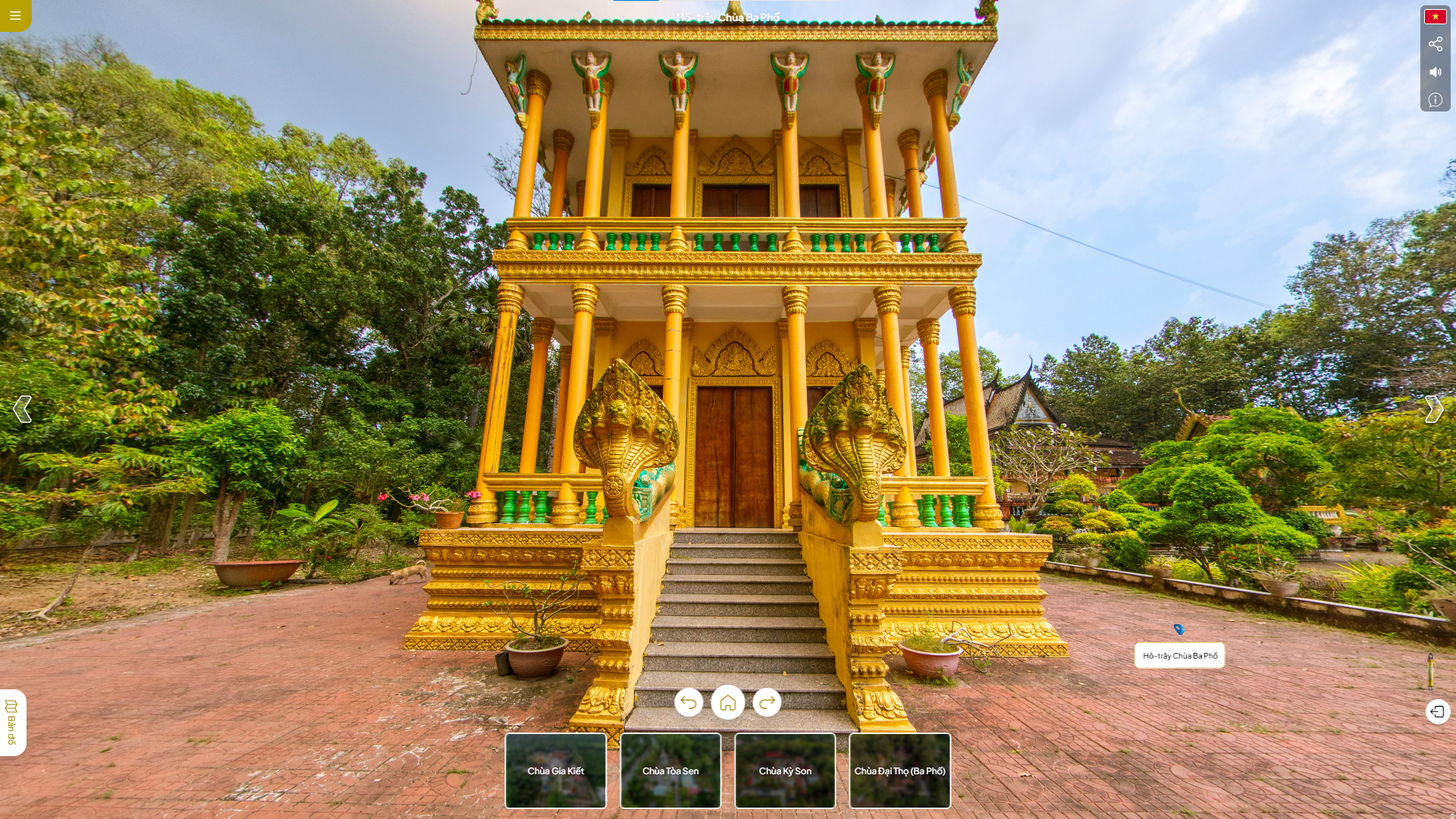
Technology 360° Tour allows for the recreation of each temple's space in the digital environment, helping users actively observe and explore the space from their own perspective.
Instead of just viewing a few representative images, users can move through the attractions, rotate their viewpoint, and observe the surrounding space.
This is particularly meaningful for heritage sites, where value lies not only in each individual image but also in the relationship between spaces, architecture, and the overall structure.
With 4 digitized temples, users can choose each location to visit, then move to another space. Thus, the experience is no longer limited to exploring a single structure but becomes a journey to visit multiple heritage sites on the same platform.
The solution also expands accessibility for those far away or unable to visit in person. Users can explore the temple space before the trip, using it as an online tour experience or continue to explore after the actual visit.
Outstanding values:
- Digitizing the space of 4 temples on the same platform.
- Allows for 360° tours and remote observation of the space.
- Enhances visualization when exploring architecture and heritage spaces.
- Connects multiple locations into a unified tour journey.
- Expands access to heritage for communities beyond the scope of direct visitors.
360° Tour – Explore the Khmer temple spaces in Vinh Long from every angle.
3. 3D Model – Visualizing architectural values and heritage objects
In addition to the 360° space, the project integrates 3D Model to enhance the observation of selected objects, details, or components within the temple space.
If the 360° Tour helps users see the overall space, the 3D Model allows for a deeper dive into each specific object.
Users can observe the model from multiple viewpoints, making the understanding of shapes, structures, and visual characteristics more vivid compared to conventional 2D images.
When combining the two forms, users can switch between “overall space” and “digitized details”, creating a more layered experience of exploring heritage.
This is also an approach suitable for the preservation of digital data. 3D models can become a visual resource for presentation, education, and research, while also laying the groundwork for further development of digital heritage exploitation in the future.
Outstanding values:
- Visualizing objects and details in 3D.
- Observing the model from multiple viewpoints.
- Connecting details with the digitized temple space.
- Adding depth to the visiting experience.
- Supplementing visual data resources for presentation and research.
3D Model – Explore heritage details from an interactive perspective.
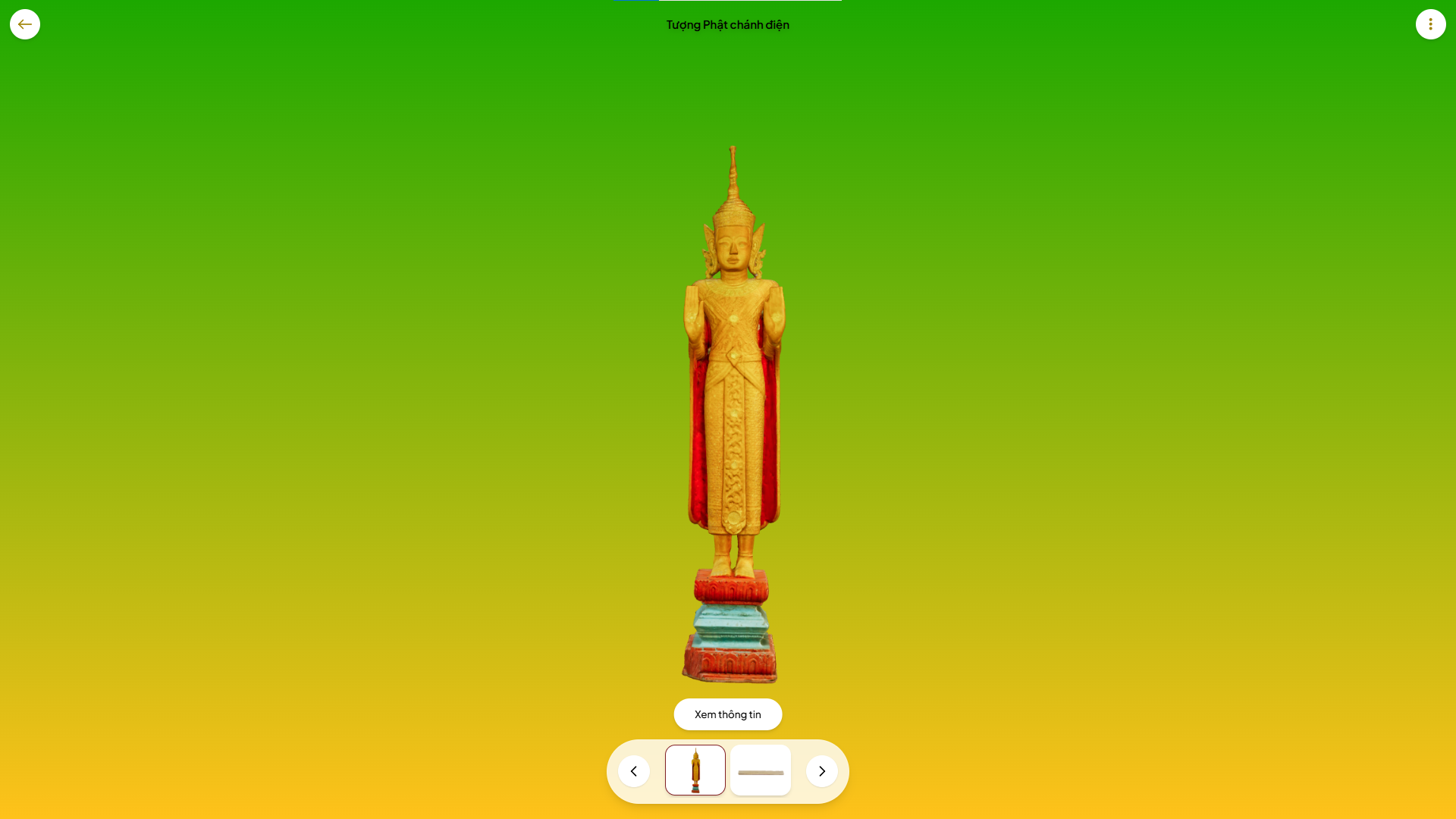
3D Model digitizes heritage objects, architecture, and artifacts at temples.
See more>>>> Why do museums and localities need to digitize 3D artifacts to preserve and promote heritage values?
4. AI Agent – An intelligent assistant accompanying the exploration journey
As the number of visiting spaces expands to 4 temples, providing a tool to assist users in searching for and accessing information becomes important.
AI Agent is integrated as an intelligent assistant accompanying the exploration of the digital heritage space.
Instead of just moving and observing, users can interact with the AI Agent to learn more about the content related to the introduced spaces.
The AI Agent creates a new layer of interaction for digital exhibitions, allowing users to actively ask questions and search for information instead of passively receiving content.
Especially for young people and those exploring Khmer culture for the first time, this form of interaction makes the exploration experience more relatable to how they access information in the digital environment.
Outstanding values:
- Assisting users in searching for information during their visit.
- Creating an interactive experience instead of a one-way information reception.
- Supporting the exploration of content in multiple temple spaces.
- Increasing proactivity in the process of understanding heritage.
- Combining AI technology with cultural introduction activities.
AI Agent – An intelligent assistant supporting the exploration of Khmer heritage spaces.

AI Agent – An intelligent assistant supporting the exploration of Khmer heritage.
See more>>>>> The benefits of applying the 3D AI interactive assistant in the digital transformation of museums and heritage sites.
5. Automated tour – Connecting 4 heritage points into one journey.
With a project consisting of multiple locations, Automated tour helps users have a clear exploration route instead of having to search for and choose each point themselves.
The tour can guide users through pre-established areas and attractions, creating a continuous journey.
The special feature of this function is the ability to connect experiences between multiple spaces, helping users not only explore one temple but also access many points within the system.
Instead of:
One temple → one individual experience
The solution aims at:
4 temples → a connected digital heritage journey.
This approach helps users easily visualize the scale of the project and explore multiple spaces in a single tour session.
For educational activities, communication, and cultural promotion, the automated tour also creates a sequential storytelling method, making the exploration journey coherent and minimizing the chances of missing important attractions.
Outstanding values:
- Connecting 4 temples into a tour journey.
- Guiding users through selected points.
- Creating a sequential exploration experience.
- Minimizing the chances of missing important areas.
- Enhancing the ability to leverage digital space in education and heritage communication.
Automated tour – Connecting the exploration journey of 4 Khmer temples on a digital platform.
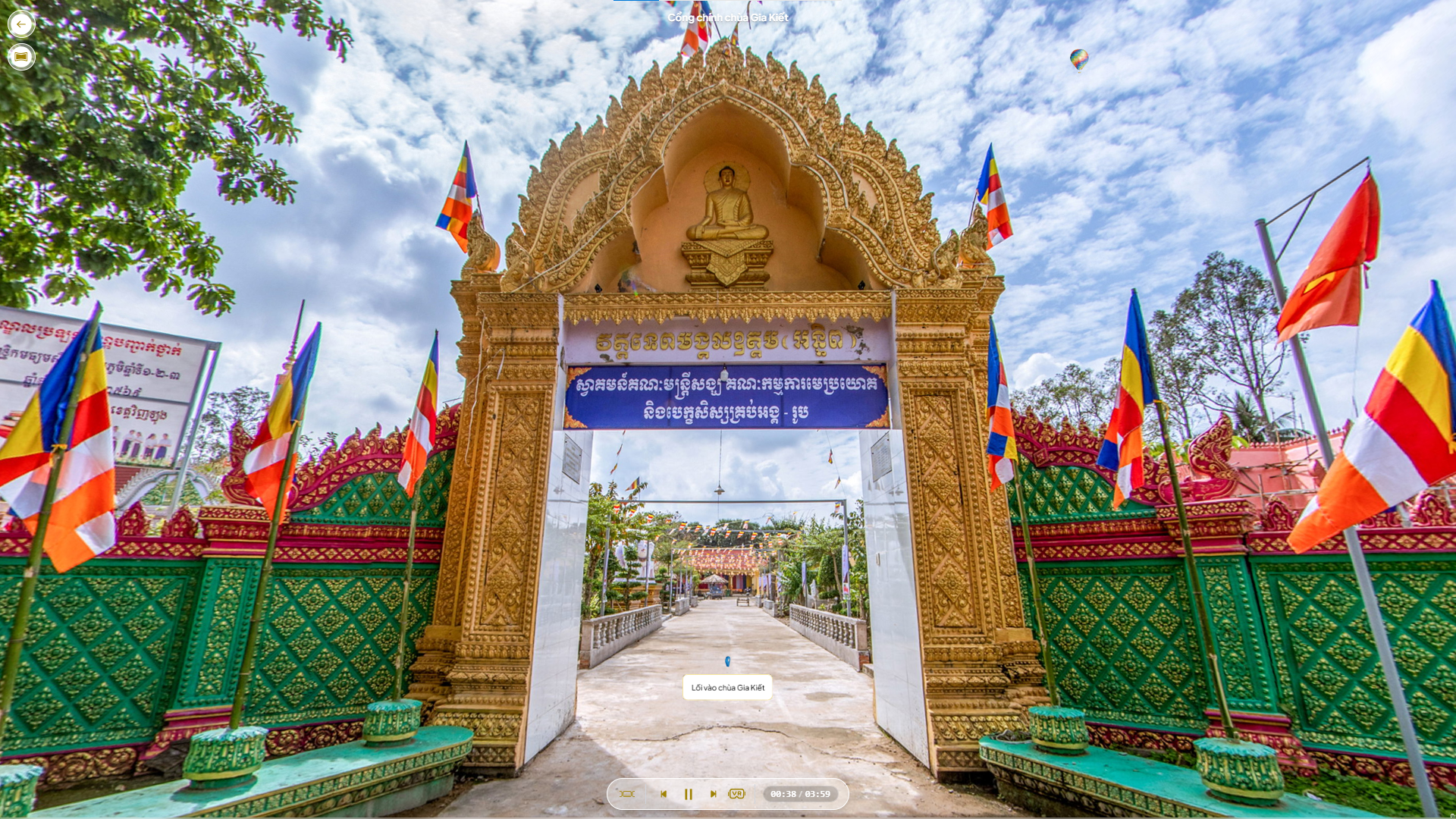
The automated tour helps connect 4 Khmer temples in the digital tour journey.
See more>>>> The benefits of 3D/360 digitization technology for the Heritage field
III. Results
The digitization of Gia Kiet Temple, Toa Sen Temple, Ky Son Temple, and Dai Tho Temple (Ba Pho) on the same platform creates a connected heritage experience space, with outstanding values:
- Digitizing 4 Khmer temple spaces: Bringing Gia Kiet Temple, Toa Sen Temple, Ky Son Temple, and Dai Tho Temple (Ba Pho) onto the 3D/360 platform.
- Forming a centralized digital heritage space: Users can choose and explore multiple temples on the same platform instead of having to access each individual source of information.
- Expand remote visiting capabilities: 360° technology allows users to actively explore the temple space without being completely limited by geographical distance.
- Visualize tangible values: 3D Model supports the observation of objects and details that are digitized from multiple perspectives.
- Increase interactivity: AI Agent creates additional methods for users to actively search for and exchange information during the exploration process.
- Build a guided tour journey: The automated tour connects attractions, helping users explore multiple spaces in a clear sequence.
- Support education and heritage communication: The digital space provides additional visual tools to introduce Khmer culture to students and the community.
- Expand the ability to promote local culture: 4 temples are connected in a digital experience, enhancing public access to the heritage space system.
- Create a foundation for digital preservation: 3D/360 space and 3D Model provide additional visual data sources for introducing, researching, and promoting heritage values in the digital environment.
Conclusion
The Digitalization Project of 4 Khmer Pagodas in Vinh Long 3D/360 is a solution that combines technology with the preservation and promotion of cultural heritage values, aiming to preserve architectural spaces and the objects being digitized in the form of visual data. With Gia Kiet Pagoda, Toa Sen Pagoda, Ky Son Pagoda, and Dai Tho Pagoda (Ba Pho) connected on the same platform, the project creates a digital heritage space that allows users to explore pagoda architecture through 360° tours, observe objects and details via 3D models, learn information with AI Agents, and experience a guided journey through automated tours. Through this, Star Global contributes to expanding methods of preserving, introducing, and accessing Khmer heritage, creating additional resources for educational, research, and cultural promotion activities, while also bringing traditional architectural and cultural values closer to the community in the context of digital transformation.